
OUR RESEARCH
Understanding Vietnamese Coffee Before and During Our Journey
Before bringing R81 to the Australian market, we wanted to understand the people, stories, and consumer perspectives behind Vietnamese coffee. Throughout the project, we combined field interviews, direct consumer engagement, and academic research to inform how R81 presents Vietnamese coffee in Australia


01 - Listening to Gia Lai
We interviewed coffee farmers in Gia Lai to understand the story behind Vietnamese coffee - from farming practices and local traditions to the challenges faced by the people who grow it. These conversations helped us bring the human story behind each bean into R81’s identity.


02 - Learning from the Industry
We also interviewed Mr. Nguyen Ngoc Thu (ICONA) to gain an industry perspective on Vietnamese coffee exports, including international market requirements, quality, traceability, branding, and export considerations.

PART 1
The conversation explored two key questions: What do international importers look for when selecting coffee suppliers? And what are the key strengths of Vietnamese coffee in global markets, particularly in Spain? His insights on quality, traceability, supply reliability, and the potential of Vietnamese coffee offered valuable perspectives for R81’s research journey.
PART 2
The video explores the challenges Vietnamese coffee brands face in international markets - from building a strong identity and consumer trust to communicating what makes Vietnamese coffee distinctive.
It also asks a simple question: Do consumers care only about what is in the cup, or also where it comes from? From the origin and growing regions to the farmers and communities behind each harvest, the story behind coffee can shape how consumers connect with Vietnamese coffee.


PART 3
To close the conversation, the R81 Team explored what it takes for a young startup to build a strong brand and earn the trust of international consumers.
The key message was clear: consistent quality, authentic storytelling, transparency, and meaningful customer experiences are essential to building trust. For R81, this means staying connected to the story of Gia Lai, its coffee-growing communities, and the people behind every bean as the brand grows internationally.
03 - CONSUMER RESEARCH
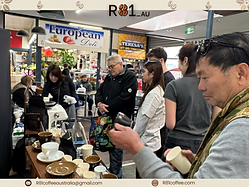
We conducted quantitative consumer research both online and through direct engagement at An Nam Market, where we combined a coffee tasting booth with on-site surveys. With 300+ responses, the data helped us explore how Australian consumers perceive Vietnamese coffee and informed our research study:
From Gia Lai to Australia: Consumer Perceptions of Vietnamese Coffee
The study examines how storytelling, cultural identity, and visual branding shape consumer perceptions of Vietnamese coffee in multicultural Australia.







Our study of 319 coffee consumers in Australia found that brand storytelling and authenticity play an important role in how consumers perceive R81 Coffee. Storytelling had the strongest positive effect on perceived value, highlighting the importance of sharing the story of Gia Lai, Vietnamese coffee heritage, and the people behind each bean. Perceived authenticity also significantly strengthened consumers’ perceived value, while perceived value strongly influenced purchase intention.
Table 1: Demographics of Respondents (n = 319)

The survey included 319 respondents, nearly half of whom consumed coffee daily (48.3%). While 74.6% had previous experience with Vietnamese coffee, 85.9% had never tried R81 Coffee. This indicates that the study primarily captures consumers’ perceptions of the brand rather than evaluations based on prior product experience.
Table 2: Construct Reliability and Convergent Validity

The measurement model demonstrated strong internal consistency, with Cronbach’s alpha values ranging from 0.900 to 0.950 and composite reliability values from 0.926 to 0.960. These results support the reliability of the constructs used to examine consumer perceptions and purchase intention.
Table 3: PLS-SEM Results and Hypothesis Testing

Perceived value emerged as the strongest reported predictor of purchase intention (β = 0.554, p < 0.001). Narrative transportation (β = 0.338, p < 0.001) and perceived authenticity (β = 0.270, p < 0.001) also positively influenced perceived value. These findings suggest that brand storytelling and authenticity may help strengthen consumers’ perceived value, which in turn is associated with greater purchase intention.